
Soil testing and soil study before you build

Before you build a residential, commercial or industrial building, soil testing, also called a soil study, assesses the nature of the ground to ensure the stability and durability of the structure.

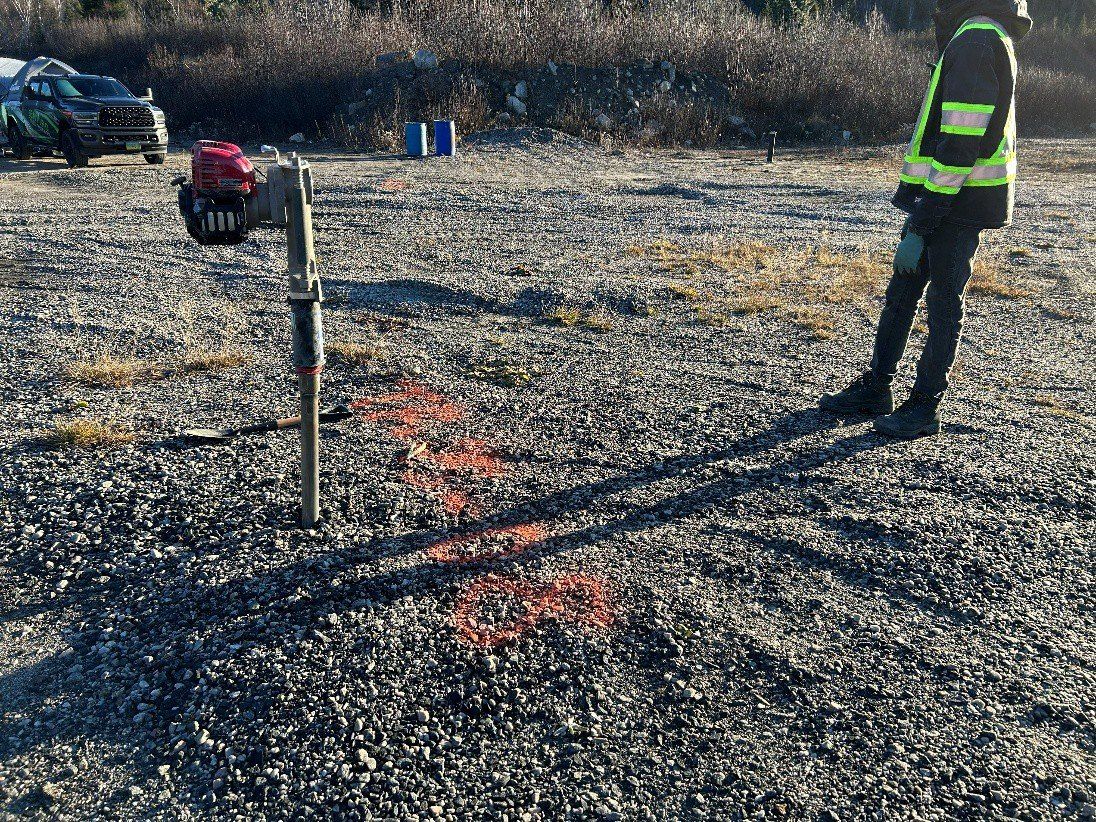
Motorized hand auger for a soil test hole, next to a Groupe LAFI technician

When do you need soil testing?

The soil carries the entire weight of your building. If it is weaker or more compressible than expected, the building settles, the walls crack and repairs are costly. Soil testing checks this before the concrete is poured.

  • Before buying a lot, to know what you will be building on
  • Before building a house, a cottage or a garage, or before an addition
  • Before building or modifying a septic system: the permit application must include a study of the site
  • Before a commercial, industrial or institutional project
  • On sloped, clayey, filled or wet ground

What does soil testing involve?

Our specialized equipment and field know-how provide reliable analyses that meet civil engineering requirements. We choose the tests according to your project and site access.

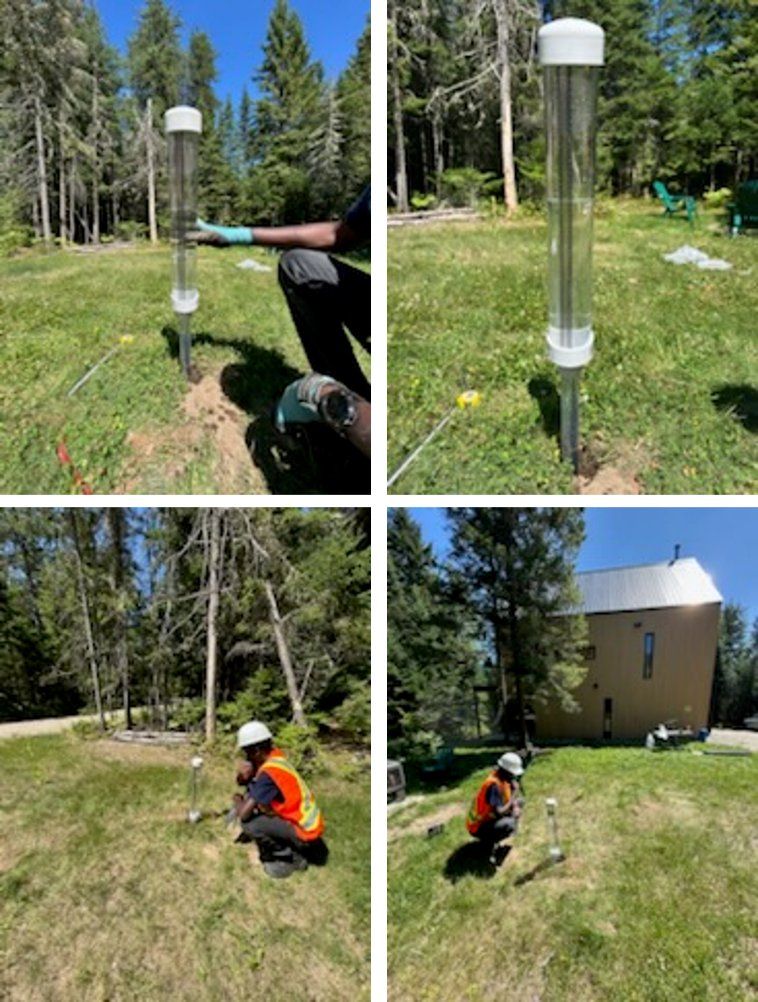
Four views of a percolation test: permeameter set in the ground and a technician taking the readings
Percolation test carried out by our team

Test holes and boreholes

A drill rig collects samples at different depths and measures the resistance of the soil (the SPT N-value). Where the site is hard to reach or the test hole is shallow, we drill manual boreholes with sampling or dig test pits.

Panda dynamic penetrometer

Light and portable, this device measures the resistance of the soil at depth, blow by blow. It complements the test holes where a drill rig cannot go.

Grain size and hydrometer analyses

In the laboratory, the samples collected at different depths are sieved and analyzed to identify the composition of the soil and its stratigraphy: sand, silt, clay, gravel or till.

Percolation test

One or more holes are dug by hand or with an excavator, then filled with water. A permeameter measures how fast the water seeps in, which shows how well the ground absorbs water and how quickly it drains.

Soil testing for a septic system

In Quebec, building or modifying a septic system requires a permit from the municipality. The Regulation respecting waste water disposal systems for isolated dwellings requires the application to include a characterization study of the site and natural land: topography, slope, permeability of the soil, and the level of the bedrock and groundwater.

Permeability is determined in particular by a percolation test or by a grain size analysis of the soil, and the Ministère de l’Environnement recommends using at least two methods. The result classifies the soil from highly permeable to impermeable, which determines the treatment systems that can be used.

Groupe LAFI prepares and signs this characterization study, ready to attach to your permit application.

Read our guide to percolation tests and septic systems

Our role in soil testing

From the field test to the engineer’s recommendations.

  • Bearing capacity tests
  • Identification of soil types: sand, clay, silt, gravel
  • Laboratory analyses
  • Test holes and boreholes
  • Frost depth assessment, to prevent frost heave
  • Technical recommendations: an engineer’s report with the soil data and suitable solutions

How soil testing works

New construction, addition or renovation: our specialists carry out precise analyses suited to your project and support you at every step.

  1. The quote

    You give us the address, the project and your plans if you have them. We propose the appropriate tests and their price.

  2. Preparation

    We review the existing data on the area and plan the location of the test holes according to the project and site access.

  3. Field testing

    Our technicians make the test holes, collect the samples, carry out percolation tests if needed and note whether water is present.

  4. The laboratory

    The samples are analyzed to classify the soil and establish its stratigraphy.

  5. The engineer’s report

    It presents the results and recommendations: bearing capacity, type of foundation, frost protection depth, drainage. Your designer and your contractor use it for the plans and the work.

How much does soil testing cost?

For a house or cottage, a soil bearing capacity study costs between $4,500 and $7,500, depending on the available data and the complexity of the project.

The price varies mainly with the number and depth of the test holes, site access, the laboratory analyses and any studies already carried out in the area. The price of a percolation test for a septic system is set by quote. If you have a deadline to meet, tell us when you make your request: we will schedule the tests and the report accordingly.

Contact us for a quote or a free consultation with one of our specialists. If your project calls for a more complete foundation analysis, see our geotechnical study page.

Frequently asked questions about soil testing

Is soil testing mandatory to build a house?

Yes. A soil study is essential to ensure the stability and durability of the house, and banks require it from clients applying for a construction loan. It is also required with a septic system permit application (site characterization study) and by the municipality near a slope in a landslide-prone area.

What is the difference between soil testing, a soil study and a geotechnical study?

Soil testing and soil study generally refer to the same process: the tests that identify the soil and measure its properties. A geotechnical study interprets them for a specific project: bearing capacity, foundations, stability, seismic risk. For a house, the three overlap: our soil tests end with an engineer’s report with recommendations.

See our geotechnical study page

How much does soil testing for a house cost?

For a house or cottage, a soil bearing capacity study costs between $4,500 and $7,500, depending on the available data and the complexity of the project. The price of a percolation test alone is set by quote, depending on the lot and its access.

Read our guide to the cost of a geotechnical study

When should the soil testing be done?

As early as possible: before buying the lot if you can, and in any case before having the foundations designed, since their type and dimensions depend on the soil. If the municipality requires the study, it must accompany the permit application.

Do you prepare the study required for a septic system permit?

Yes. We prepare and sign the characterization study of the site and natural land that the municipality requires with the permit application: percolation tests, soil analyses, bedrock and groundwater levels.

Read our guide to percolation tests and septic systems

Who does the testing and writes the report?

Our technicians carry out the test holes and the tests; a Groupe LAFI engineer interprets the results and signs the report.

All our guides

Have a project or a technical question?

Tell us about your project: our engineers will get back to you with a clear estimate, whether for a geotechnical study, an environmental site assessment or materials testing.

CallGet a quote